





How Quranic Arabic Becomes Easier When You Learn the Right Words First

Anyone who's tried to read the Quran in Arabic knows the feeling. You can pronounce every word perfectly, the recitation sounds right, and you still have no idea what you just read without flipping to the translation. It's a strange gap — sound without meaning — and it's the thing that makes Arabic feel so much harder than it actually is.
Here's a fix that's worked for a lot of people: stop trying to learn everything at once. Pick a small set of words that show up again and again across the Quran, and focus there first. Once those words start showing up in Surah after Surah, something shifts — the language stops feeling like a wall of unfamiliar symbols and starts feeling like something you're already halfway into.
[edit] Why the starting words matter so much
Where you begin shapes how the whole thing feels afterward.
Picture spending a week memorizing a list of Arabic words you barely run into again. You might recall them for a lesson, sure, but there's nothing afterward to keep them alive. Compare that to learning a word that actually turns up often in the Quran — you read it after salah, you hear it in a recitation a few days later, then it pops up again in a completely different Surah. Every one of those moments does more work than another flashcard ever could.
That's really the whole argument for starting with high-frequency Quranic vocabulary instead of trying to build a giant word list on day one.
[edit] Recognition, not memorization
There's a real difference between knowing a word well enough to pass a quiz and actually recognizing it when it shows up unannounced.
Take هدى (huda) — guidance. In a lesson, with the English sitting right next to it, remembering the meaning is easy. The real test is weeks later, seeing the word inside an ayah with no translation in sight. If the meaning comes back to you — even after a beat of hesitation — that's the word actually settling in.
That's the goal worth chasing early on. Not finishing a long list, but building that quiet moment of recognition.
[edit] Let new words breathe
New learners tend to assume faster is always better. Ten words turn into twenty, twenty into fifty, and pretty soon there's more to review than there's time in the day. What happens next is predictable — the older words start slipping away while the pile of new ones keeps growing.
A smaller, slower target usually works better. Take a handful of words. Sit with them. Read them more than once, listen to how they sound, try recalling the meaning before you check. Then just notice — did that word show up anywhere in your regular reading this week? Once it feels familiar, add another one.
It's less exciting than trying to power through a huge list, but it holds up over time in a way cramming never does.
[edit] Pair the spelling with the sound
Quranic Arabic isn't just something you read — it's something you hear, constantly. So the learning should go both ways too. A word can look completely familiar on paper and still catch you off guard the first time you hear it recited.
When you're learning something new, try connecting all three pieces at once: the spelling, the pronunciation, and the meaning. See رحمة, hear "Rahmah," and tie it to mercy. Later on, hearing that same sound during a recitation gives your brain another shot at recognizing it — which is exactly why audio ends up mattering so much for people trying to actually understand the Quran, not just memorize it on a page.
[edit] Let your normal reading do some of the work
You don't need a separate study session every time. Your regular Quran reading is already an opportunity to notice what's sticking.
After spending time on a few words, just go back to reading as you normally would — no need to stop and dissect every line. Just pay a little attention as you go. Does this word look familiar? Can you guess the meaning before checking the translation? Have you run into this one somewhere else recently?
Those small, almost throwaway moments are where the real learning happens. If you're not sure where to start, NorAI's list of common Quranic words is a decent place to pull your first batch from.
[edit] Don't wait for grammar to make sense first
Grammar matters, obviously, but throwing it at a beginner too early tends to scare people off before they've built anything to hang it on.
You don't need to understand every rule before you start recognizing useful words. Vocabulary can come first. Once a handful of words feel familiar, grammar suddenly has something to work with — instead of learning a rule through a sentence made entirely of unknowns, you start noticing how words you already know shift and connect with each other. That context makes everything that comes after so much easier to place.
Grammar isn't optional forever. It just doesn't need to be the first hurdle.
[edit] The review is where it actually sticks
A word usually feels solid the day you learn it. The real test comes days later.
Can you still read it? Recall the meaning? Pick it out by ear? If not, that's completely normal — it just means the word needs one more pass. Regular review is honestly the simplest lever you have for making vocabulary stick.
Try going back over older material before jumping into anything new. A few minutes of that will tell you exactly which words have settled in and which ones still need attention. And forgetting a word isn't really a failure — it's just information telling you what to revisit next.
[edit] Short and consistent beats long and occasional
You don't need to restructure your whole day around this. A short, repeatable routine works better for almost everyone.
Ten minutes reviewing what you already know, a bit of listening, two or three new words — that's plenty. Those same words get reinforced later anyway, just from your regular reading or listening throughout the week. The routine works because it's riding on top of something you're likely already doing, not competing for a separate block of time you don't have.
The most sustainable routine is rarely the most ambitious one. It's the one you can still keep up when the week gets messy.
[edit] Where something like NorAI fits in
The hard part of studying alone isn't motivation — it's not knowing what to learn next. You end up with scattered vocabulary lists, a few saved videos, some bookmarked resources, and no real order to any of it.
NorAI tries to solve that by giving the process some structure — guided lessons combined with audio, visual practice, and built-in revision, so learners build familiarity with Quranic vocabulary step by step instead of facing Arabic as one enormous subject to conquer all at once. It's a useful bit of scaffolding, especially for beginners who want some direction while still moving at their own pace.
To be clear, it's not a substitute for actual Quran recitation, proper translations, or Tafseer — its job is narrower than that. It's just there to help build familiarity with the words you'll keep running into.
[edit] Familiar words change how a verse feels
There's a real shift that happens the first time you open an ayah and recognize a few words in it. You might not follow the whole sentence. You might still need the translation. But the verse doesn't feel like a total stranger anymore.
One word means something you already know. Another rings a bell from last week. A third finally clicks after hearing it enough times. Bit by bit, those small wins are what make the Arabic start to feel approachable instead of impenetrable.
That's really the whole case for choosing your starting words carefully. The goal was never to learn every word in the Quran first — it's to build just enough familiarity that your everyday reading starts reinforcing the study on its own.
[edit] Build the foundation before chasing speed
There will always be more words to learn, always another lesson waiting. But progress means a lot more when it's stacked on a foundation that's actually holding.
Give the important words time. Listen to them. Come back to them. Notice them in the wild. Then keep building.
Given enough time, the language stops feeling like an unfamiliar block of symbols and starts feeling like something you can actually recognize — a little more each week.
If you're looking for a structured way to build this kind of familiarity, NorAI combines vocabulary learning with audio, visual practice, and regular revision — available on the App Store and Google Play.
Featured articles
Check out some of the best features and news from Designing Buildings as well as key stories from around the web.
The importance of early engagement

Construction lessons from the Trillium HealthWorks Experience Centre.
Mayors are to be given planning call in powers

Mayors across England will be able to make the most important planning decisions.

The Master Builder: William Butterfield and his times. Book review.

Why construction can't afford to ignore the skills gap.
Building Safety Regulator, 19 August

Gill Kernick appointed Independent Chair of Residents’ Panel.
Connecting knowledge, technology and conservation
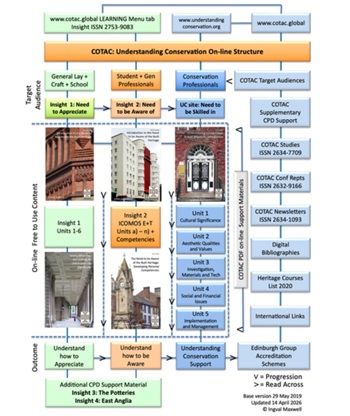
Building competence for the future of built heritage.
Building Regulations and Building Safety Act

CIOB publishes free advice for non-domestic clients.

Building Safety Newsletter from MHCLG.

An extraordinary record of steel engineering worldwide.

Households living near new pylons to save on bills.

ECA warns growth must not outpace grid capacity or skills.
The role of the client and decision making

CIOB response to built environment professions call for evidence.